
The Difference Between Epoxy Colored Sand and White Cement Caulking
Time:
2024-07-16 14:42

In the process of decorating and renovating houses, caulking is a crucial link. It not only affects the beauty of the overall decoration, but also directly affects the durability of the house and the convenience of cleaning and maintenance. In the market, epoxy colored sand and white cement are two common caulking materials, each of which has unique advantages and characteristics. This article will discuss in detail the difference between epoxy colored sand and white cement caulking from the aspects of material composition, performance characteristics, application scenarios, construction difficulty and post-maintenance.

Material composition
Epoxy colored sand: Epoxy colored sand is a caulking material mixed with multiple ingredients such as epoxy resin, curing agent, pigment and quartz sand. Epoxy resin as a base material gives epoxy colored sand extremely high strength and wear resistance; the addition of quartz sand further enhances its hardness and wear resistance. In addition, the use of pigments makes epoxy colored sand rich and diverse in color, which can meet the needs of different decoration styles.
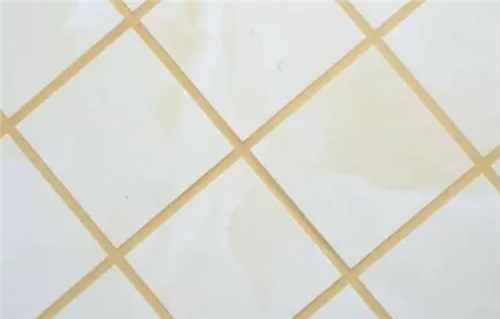
White cement: White cement is a building material with cement as the main component, which has high strength and hardness. Compared with epoxy colored sand, white cement has a relatively simple composition, mainly made of cement clinker and an appropriate amount of gypsum. White cement is white in color and is suitable for occasions where white caulking is required.

Performance characteristics
Epoxy colored sand:
High strength and wear resistance: Due to the mixture of epoxy resin and quartz sand, epoxy colored sand has extremely high strength and wear resistance, suitable for places with high frequency of use, such as shopping malls, garages, etc.
Waterproof and mildew-proof: Epoxy resin itself has good waterproof properties. After adding antibacterial ingredients, it can effectively prevent the growth of mold, especially suitable for humid environments such as bathrooms and kitchens.
Rich colors: Epoxy colored sand has a variety of colors, which can meet the needs of different decoration styles and is not easy to fade.
White cement:
High strength and hardness: White cement has high strength and hardness, suitable for filling small gaps on the wall or pasting work.
Single color: White cement is white in color, but lacks color changes, and is not suitable for occasions where colorful caulking is required.
Easy to soften when exposed to water: White cement easily softens when exposed to water, and may fall off, become moldy, or turn black in a long-term humid environment.
Application scenarios
Epoxy colored sand:
Places with high-intensity requirements: such as shopping malls, large supermarkets, garages, etc., which are used frequently and the ground needs to bear a large weight and friction.
Wet environments: such as bathrooms and kitchens, epoxy colored sand has excellent waterproof performance, which can prevent water from seeping into the gaps and prevent mold growth.
Outdoor places: such as terraces and balconies, epoxy colored sand has good weather resistance and can resist the influence of ultraviolet rays and other weather factors.
White cement:
Ordinary caulking: Suitable for filling or pasting small gaps on the wall, such as simple caulking between tiles.
Projects with limited budgets: Since the price of white cement is relatively low, it is suitable for decoration projects with limited budgets.
Construction difficulty
Epoxy colored sand: The construction of epoxy colored sand is relatively complicated and requires a professional construction team to operate. The construction steps include cleaning the gaps between tiles, mixing materials, caulking, smoothing, etc., which require high construction technology.
White cement: The construction of white cement is relatively simple and can be completed by general construction workers. However, it should be noted that white cement needs to be kept dry after grouting to avoid softening in water.
Post-maintnance
Epoxy colored sand: Due to its high strength and wear resistance, the maintenance of epoxy colored sand is relatively simple. Usually, it only needs to be cleaned regularly and avoid using strong acid and alkali cleaners.
White cement: White cement requires more maintenance after grouting. In a humid environment, white cement is prone to softening, falling off, moldy, and blackening, so it needs to be checked and cleaned regularly, and re-filled when necessary.
In summary, epoxy colored sand and white cement have their own advantages and disadvantages in grouting and beautifying seams. Epoxy colored sand has more advantages in high-end decoration and humid environments due to its high strength, wear resistance, waterproof and mildew-proof, and rich colors; while white cement is suitable for ordinary grouting and projects with limited budgets due to its low price and simple construction. When choosing grouting materials, you should weigh them according to the specific usage scenarios, budgets, and construction conditions to ensure the best decoration effect.
HELLO
Please feel free to contact us for more details, there will be a professional team to provide you with satisfactory service
Add
17# Fuze Road, Sanjiao Town, Zhongshan City, Guangdong Province, China
Still have any question?
Get a free consultancy!
You can contact us through phone:
Tel:+86-15390962544 E-mail:cualiofficial@outlook.com
Contact Us
Zhongshan Cashleton Building Materials Co., Ltd.
Tel:+86-15390962544
E-mail:marketing@zszlok.com
Add:No. 17 Fuze Road, Gaoping Chemical Park, Sanjiao Town, Zhongshan City